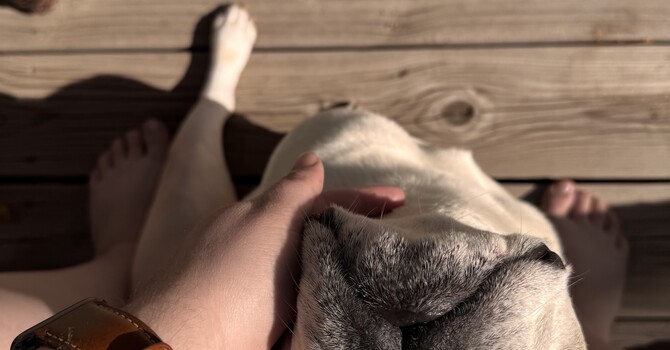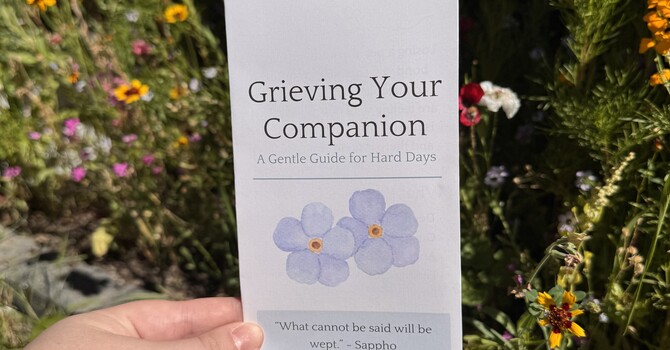
Some of the hardest grief I know comes after a decision made out of love.
Maybe you sat on the floor of the vet's office, or in your own living room, and you said yes. Maybe you'd watched them slow down for months, or maybe it all happened in one afternoon. Either way, you were the one who had to choose. And in the days after, when the house is too quiet and their bowl is still by the door, the questions start.
Did I do it too soon?
Did I wait too long and let them suffer?
Did I give up on them?
How could I be the one who signed that paper?
So many people carry these questions after saying goodbye to an animal. If they're circling in your mind right now, I want to offer this gently: guilt is not proof that you did something wrong. Very often, it's grief that hasn't found its name yet.
Why this guilt runs so deep
When an animal is old or sick, someone has to decide, and they can't tell us what they want. So the weight falls to us. Because we made the choice, our minds start to blur two things: choosing when, and causing why. The illness, the age, the injury were never ours. Only the decision was.
Pet parents aren't the only ones who know this weight. People who have made end-of-life decisions for a parent or partner often recognize this guilt too. Choosing, even out of love, can leave a mark.
There's something else underneath. Guilt can feel like a way of staying close. If I keep blaming myself, I keep holding on, and letting go of the guilt can feel like loving them less. It isn't. But it makes sense that it feels that way.
From "what did I do wrong?" to "look at what I lost"
In my work, I see how often shame and guilt stand in front of grief like a wall. Guilt gives us something to do: replay the decision, look for the mistake, imagine a different ending. Grief asks for something harder. To stop searching, and simply miss them.
When guilt starts to soften, it often doesn't feel lighter right away. It can feel heavier, because underneath it is the plain, aching fact that they're gone. That isn't a step backward. It's grief finally getting its turn.
Here are a few ways you might begin to let grief take the place of blame. Take what fits and leave what doesn't.
Ask what the guilt is protecting. If this guilt is telling you how much you loved them, what were you trying to do for them when you made that call? Spare them pain? Keep their dignity? Keep your promise to look after them, all the way to the end? Underneath the guilt, you might find that promise.
Imagine it was a friend. Picture someone you love telling you the same story: the same diagnosis, the same slow decline, the same decision. Would you tell them they failed their animal? Most of us would never say to a friend what we say to ourselves. You're allowed the same gentleness.
Draw the whole picture. Guilt tends to hand us all of the responsibility. Try drawing a circle and dividing it among everything that played a part: the illness or old age, what medicine could and couldn't do, the pain they were in, the realities of your life, and your final decision. You decide how big each piece is. Many people find their own slice is smaller than it felt.
Remember you carried the hard part. Choosing euthanasia often means taking on a painful decision so your animal doesn't have to go through more decline. You carried that weight so they didn't have to.
Remember the whole life, not just the last day. Our minds hold on tight to the hardest moments: the drive to the clinic, the last breath. But your life together was made of thousands of ordinary days. Morning walks. The weight of them at the foot of the bed. The way they knew the sound of your car in the driveway. Maybe gather a few photos, or write down favourite memories from when they were well. The last chapter belongs to the story. It isn't the whole story.
Letting grief take the place of guilt
Letting go of guilt doesn't mean forgetting, and it doesn't mean the loss stops hurting. It means letting the hurt be what it is: grief, for an animal you loved, who loved you back.
Feeling torn and heartbroken after the decision doesn't mean you chose wrong. It means you were trusted with something impossible, and you didn't look away.
Go gently with yourself. Grief for an animal is real grief, even when the world treats it as small.
I'm Amie Nelson, MSW, RSW, a grief and trauma therapist in Calgary, offering sessions in person and online across Alberta, Ontario and Nova Scotia. If you'd like support, a free 20-minute consult is a gentle place to start: tworiverstherapy.ca. If you're in crisis, call or text 9-8-8.

Amie Nelson
Contact Me