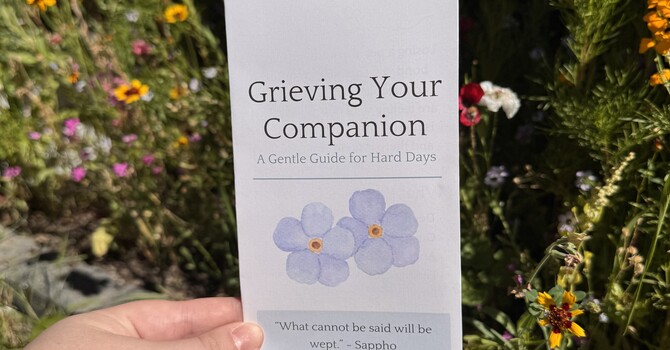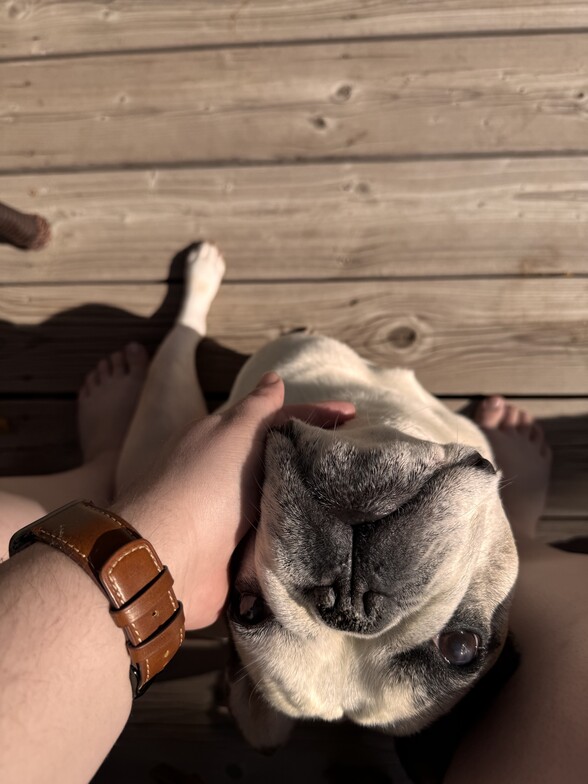
I'm so sorry you're here. If you're reading this, an animal you both love is near the end, and you and your partner are trying to work out what to do.
It's common for two people who love the same animal to see this moment differently. One of you may feel ready before the other. One may want every test, while the other quietly worries about the bill. One may need to talk it through, and the other may not be able to yet. None of this means your love for your animal, or for each other, is in question.
Why this decision weighs so much
With our animals, we're the ones who decide. There's no conversation with them about what they want, and no directive to follow. That's a lot to hold, and it can stir up things that run much deeper than the decision itself.
A few places couples often get stuck:
- Different readiness. One of you sees suffering that needs to end. The other is still hoping for more time, or a turn for the better.
- The weight of choosing. Some people feel they'd be "playing God." Others feel it would be cruel not to step in.
- Different values. Beliefs about quality of life, natural death, medical treatment or faith can pull you in different directions.
- Money. Treatment can cost more than a household can manage, and that can be very hard to say out loud.
- Fear of regret. Worry about doing it too early or too late, and carrying that afterward.
When all of this collides, it's easy to end up on opposite sides of the room instead of side by side.
Turning toward each other
The goal isn't to make the hard feelings go away, or to agree right away. It's to stay on the same side while you decide.
There's no perfect moment to find. When couples disagree about something this big, it can turn into a debate. One partner brings the test results; the other brings the good moments from yesterday, a wagging tail, a meal finished. But there is no exactly right day. Arguing toward one usually leaves both people exhausted, and sometimes resentful. Instead of asking "Who's right about when it's time?", you might ask each other, "How do we make this choice together, even without knowing for sure?"
Start gently, and say what's underneath. Under stress, our thoughts get loud and rigid:
If I agree now, I'm giving up on them.
If we wait another day, we're being cruel.
If I bring up the money, my partner will think I don't love our dog.
When those thoughts take over, it's easy to come out swinging, or to go quiet. It can help to start with how you feel rather than what your partner is doing: "I'm scared and I need us to slow down," instead of "You're rushing me." Naming the fear underneath ("I'm terrified I'll feel guilty forever") often invites comfort instead of a defence.
Look for the love on both sides. When two people who love an animal disagree, it's rarely because one loves them less. Maybe one of you wants to act sooner because you value their dignity and want to spare them a crisis. Maybe the other wants to wait because you treasure every last day together and need to know you tried everything. Both of those are love. They're different ways of protecting the same animal.
If you can, sit down together without trying to decide anything yet, and wonder about these:
- What earlier losses or illnesses might be shaping how each of us feels?
- Six months from now, how do we hope we treated each other this week?
- What matters most to us about their comfort, and where do we already agree?
Separate who you are from what you decide. It's common to tie this choice to being a good person: "A good owner wouldn't give up." "A responsible adult wouldn't spend this much." Those thoughts can feel true without being true. Choosing to end suffering doesn't make you heartless. Naming a financial limit doesn't make you a failure. Wanting to wait doesn't make you selfish.
A few steps you can take together
- Go to appointments together when you can, so neither of you carries the medical news alone. Ask your vet about a quality-of-life scale; many use one, such as the HHHHHMM scale, to track how an animal is doing over time.
- Agree on your signs ahead of time. With your vet's help, choose two or three signs that will tell you it's time. Then the decision rests a little less on one person's read of one bad day.
- Give yourselves time when you have it. If your vet says there's room, it's okay to take a day or two to let it sink in.
- Reach for each other. A hand on a shoulder, sitting together beside them, a quiet "I'm here." Small things keep you on the same side.
Staying close through it
These decisions are rarely neat, and they're never painless. But they don't have to come between you. When you stop searching for the perfect answer and start looking for the love beneath your partner's view, you can walk through this together, and grieve together afterward.
Be gentle with yourselves, and with each other. Feeling heartbroken and unsure doesn't mean you're getting it wrong. It means you love them.
I'm Amie Nelson, MSW, RSW, a grief and trauma therapist in Calgary, offering sessions in person and online across Alberta, Ontario and Nova Scotia. If you'd like support, a free 20-minute consult is a gentle place to start: tworiverstherapy.ca. If you're in crisis, call or text 9-8-8.
*I've completed Levels 1 and 2 of Gottman Method Couples Therapy training, this blog is informed and draws from John and Julie Gottman's research on how couples talk through conflict.

Amie Nelson
Contact Me