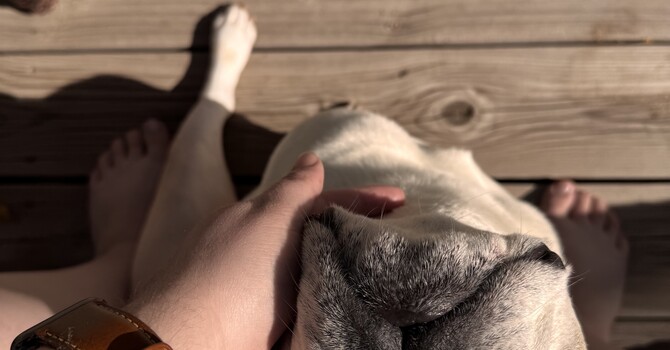
When an animal dies, the house changes. The sound of them on the floor is gone. Their bowl is still by the door. The walk you took at the same time every morning has nowhere to go.
And there's often no funeral. No time off work. People might send a kind text, and then the world moves on pretty quickly. Sometimes someone says, "It was just a dog," or asks when you're getting another one, as if love could be replaced like a lamp.
But you know what you lost. You lost the one who was there every morning. The one who knew your routines better than anyone, who sat with you through the hard years, who never needed you to be anything other than exactly who you were. That kind of companionship is rare. Of course losing it hurts this much.
This is real grief, even when the world treats it as small.
When this loss stirs up others
Something I see often is that losing an animal can open doors we thought were closed.
Maybe they were with you through a divorce, or a move, or the year your parent died. Maybe they were the steady one in a childhood that didn't feel very steady. When they go, it can feel like losing a piece of that whole chapter of your life. And sometimes older grief, grief you thought you'd made peace with, comes rushing back in.
That isn't a sign that something's wrong with you. It's how grief works. Our losses are connected, and one can wake up the others.
This loss can also shake some of the things you believed. About death, and what happens after. About whether you did enough. About fairness, and why the good ones always seem to go too soon. If you find yourself wrestling with those questions, you're not alone. They're part of grieving too.
If there are children in your home
Kids often feel the loss of an animal very deeply. Sometimes it's their first real experience of death. A few things that tend to help:
- Use honest, simple words. It's tempting to say a pet "went to sleep" or "went away," but young children take words literally. Sleep can become scary. "Went away" can leave them waiting for a return. "Died" is a hard word, but it's a clear one.
- Let them ask questions, even the same ones over and over, and answer as simply and truthfully as you can. It's okay to say, "I don't know."
- Let them know whatever they feel is okay. Sad, confused, angry, fine one minute and crying the next. That's how kids grieve. They move in and out of it.
- Notice how they play. Children often work through grief with their imaginations: drawing, pretend play, a funeral for a stuffed animal. If you can, join them there.
If you notice big changes that don't ease with time, like trouble sleeping, struggles at school, or a child who seems to shut down, it's worth reaching out to your family doctor or a child therapist.
Supporting a partner or a friend
If someone you love is grieving their animal, you don't need the perfect words. Being there matters more than anything you say.
- Let them grieve their own way. Your partner might cry for weeks while you feel mostly numb. Your friend might want to talk about their cat constantly, or not at all. Try not to compare, and try not to judge how long it's taking.
- Say it plainly. "I know how much she meant to you." Say their animal's name. People often stop saying it, and grieving people notice.
- Offer something specific instead of "let me know if you need anything." Drop off dinner. Walk with them on the route they used to take together. Help put the bowls away when they're ready, not before.
- Check in after the first few weeks. That's often when the quiet really sets in and everyone else has moved on. Grief for an animal doesn't end quickly either.
The animals who are still here
If you have other animals at home, you might notice they're grieving too.
Animals form deep bonds with one another. You might see your surviving pet searching the house, waiting by the door, eating less, sticking to you more than usual, or becoming quiet and withdrawn.
Keeping their routines steady can help: meals, walks, bedtime, the familiar rhythm of the day. Give them extra time and closeness if they want it. And if the changes go on for a while, or they stop eating, check in with your vet.
There's something tender about grieving alongside another animal. Sometimes they're the only one in the house who understands exactly what's missing.
Letting yourself grieve
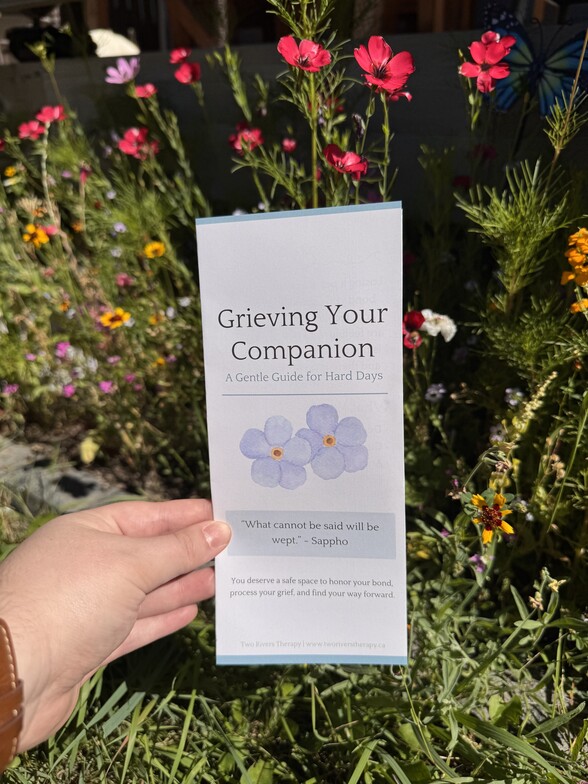
There's a line from the poet Sappho that I come back to often: "What cannot be said will be wept."
I think about that a lot with this kind of loss. When the world doesn't give us space to say how much it hurts, the grief doesn't disappear. It finds its way out somehow. In tears in the car. In the moment you reach for the leash that isn't there anymore.
So if you can, find somewhere to say it. To a friend who gets it. In a letter to them. Out loud on a walk. Or in a room with someone whose job is to sit with you while you say it.
There's no right amount of time for this. It's never too early, and it's never too late, to look for support. You deserve a space to honour this bond, to feel what you feel, and to find your way forward, carrying them with you.
I'm Amie Nelson, MSW, RSW, a grief and trauma therapist in Calgary, offering sessions in person and online across Alberta, Ontario and Nova Scotia. If you'd like support, a free 20-minute consult is a gentle place to start: tworiverstherapy.ca. If you're in crisis, call or text 9-8-8.

Amie Nelson
Contact Me